


Today, artificial intelligence plays a similar role. The rapid expansion of data centers and investments in AI infrastructure have created a situation where the demand for key IT components significantly exceeds the manufacturers' ability to produce them.
The peak has not yet been reached
The consequences are already visible in Lithuania: the prices of some server memory components have increased two to six times in less than a year, and market experts do not rule out further price hikes. According to Vidmantas Bakas, Sales Manager at the IT solutions company Heximus, the current situation is not a short-term market fluctuation, but the result of long-term changes.
"Today, we are seeing not just price increases, but a structural supply shortage. Manufacturers are increasingly shifting a portion of their capacity toward HBM and server memory production, which keeps the supply of standard DRAM limited. The impact of new production capacity on the market is unlikely to be felt immediately. As long as demand grows faster than production volumes, price pressure will remain," says V. Bakas.
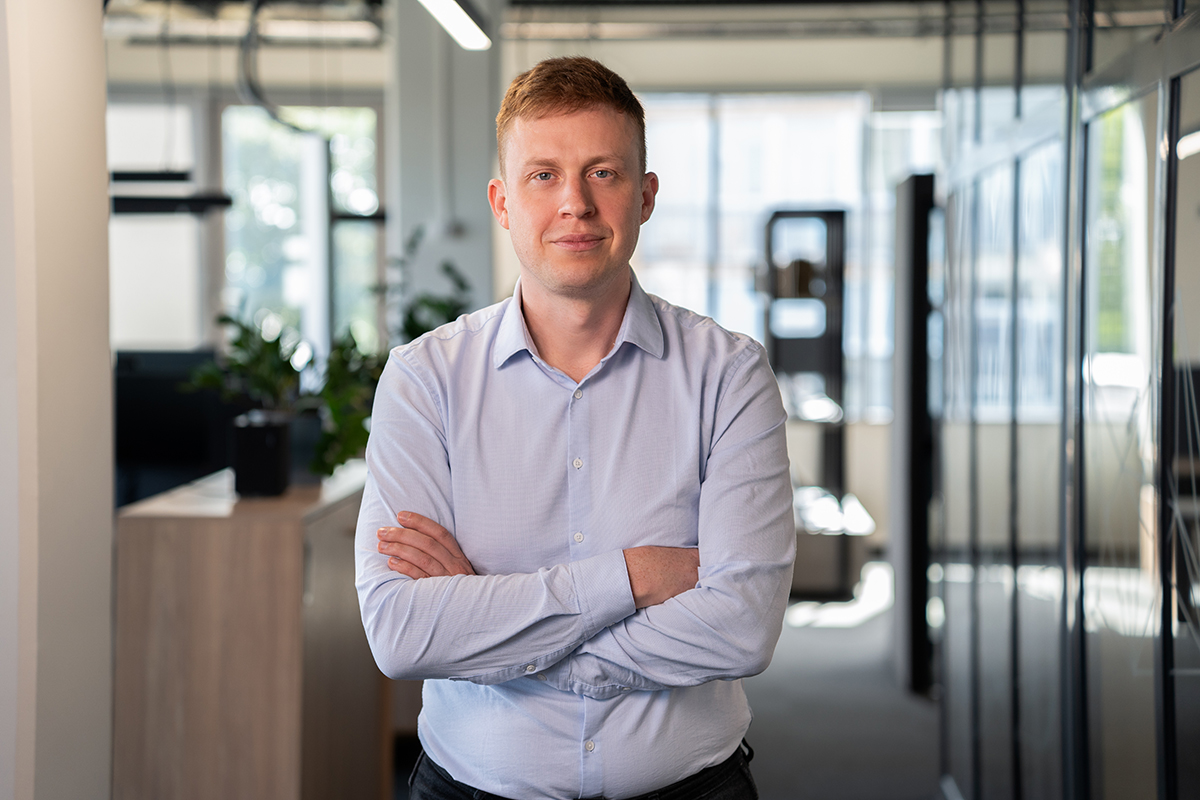
According to him, additional market tension is being created by the development of artificial intelligence infrastructure. Major tech players are investing billions in new data centers, which means the need for memory, processors, and other components remains at record levels.
V. Bakas notes that due to the drastically increased costs of server equipment, it is worth it for businesses to re-evaluate their infrastructure strategy.
"Just a few years ago, organizations often weighed what was more economical—in-house infrastructure or the cloud. Today, due to increased hardware costs, that balance is shifting. In some cases, it is already more cost-effective for companies to move some systems to the cloud, as investments in new server infrastructure have become significantly higher than they used to be.
Part of the market still hopes that prices will soon return to previous levels, but there are currently no objective grounds for this. Even with the emergence of additional production capacity, it is unlikely that manufacturers will return to the prices seen a few years ago. The market has already adapted to a new reality," notes V. Bakas.
As equipment costs rise, IT strategies are changing
Rising infrastructure costs are also changing corporate investment decisions. According to Augustinas Buivydas, Commercial Director at Heximus, more and more organizations are beginning to evaluate not only the purchase price of equipment but the entire lifecycle cost structure.
"If a few years ago an in-house server was often the more economically attractive choice, the situation is changing rapidly today. Some organizations are already seeing that due to increased hardware prices, cloud solutions are becoming more financially competitive than purchasing new infrastructure," says A. Buivydas.

According to him, businesses are increasingly looking for ways to defer large capital investments and opt for more flexible models.
"We are seeing several clear trends: companies are extending the lifespan of their equipment, choosing extended warranties, investing more frequently in upgrading existing workstations, and more actively evaluating cloud options. This allows them to avoid large one-time investments and provides more flexibility in planning IT budgets," states A. Buivydas.
Waiting can cost more
Experts estimate that the coming period will be crucial for businesses planning IT infrastructure upgrades. Although older stock can still be found on the market and temporary manufacturer offers can be utilized, such opportunities are rapidly diminishing.
"Paradoxically, we still have a certain window of opportunity today. There is still stock of older models on the market, some purchases can be planned in advance, and the end of the financial year for some manufacturers creates additional opportunities to secure more favorable terms. However, this period will not last forever. The closer we get to 2027, the less old stock will remain on the market, and the situation will become much harder to predict.
Currently, the most important factor is planning. Organizations that only assess their IT needs when equipment becomes critically outdated may face significantly higher costs. Meanwhile, by planning purchases in advance, it is possible to take advantage of market windows when manufacturers and distributors offer more favorable terms," notes A. Buivydas.
According to him, the biggest mistake today would be to wait for prices to return to previous levels on their own.
"We can still talk about rising prices and the opportunity to prepare for them. In a year or two, the main challenge may not just be the price, but availability. Organizations should view the current situation as an opportunity to prepare for future market uncertainty," says A. Buivydas.
Geopolitics remains an additional risk factor. A large portion of the most advanced semiconductors and memory components are still manufactured in a limited number of regions, and any supply chain disruptions or geopolitical tensions could further impact global market supply.
According to Heximus representatives, the most important competitive advantage in the coming years will not be the ability to find the cheapest equipment, but the ability to strategically plan infrastructure, optimize existing resources, and choose the right balance between on-premises infrastructure and cloud services.